

12 Oct
2026
Last Updated: October 12, 2026
Overcoming self doubt is not a sign that you lack talent.
At Upstormed, we hear the same story from readers, customers, and creators: the closer a project gets to being shared, the louder the doubt gets. That timing is not a coincidence.
Your brain is wired to spot threats. When you put your work in front of others, you are risking judgment, and your mind treats that risk like danger.
The good news: doubt is not the enemy of creativity. It is often a companion to it.
What matters is what you do next. Below, we break down practical ways to work through self-doubt, build creative confidence, and keep making things that matter to you.
Creative confidence is the belief that you can make something worthwhile, even when the result is uncertain. It grows through action, not through waiting to feel ready.
You do not need a big breakthrough to start. You need small, repeatable habits. Here are two exercises you can use this week.
When doubt hits mid-project, stop and do this:
This works because it interrupts the spiral. You move from judging the work to doing the work.
Keep a running list of small wins. Not awards. Not sales. Small wins.
Review the log weekly. Over time, it becomes evidence that you are moving forward, even on days that feel slow. That evidence is what builds self-belief.
Art journaling is a practice of combining images, color, and words in an unedited notebook to explore what you think and feel. It is not about making good art. It is about making honest art.
Unlike a finished portfolio piece, an art journal has no audience. That freedom makes it one of the fastest ways of overcoming self doubt.
Try these prompts:
Many people find that after a few weeks of journaling, patterns emerge. You start to see the same fears showing up again and again. That self-awareness is the first step toward challenging them.
Creative expression activities for adults are any hands-on practices that let you explore ideas, feelings, and identity without the pressure of a finished product. They work best when the goal is exploration, not output.
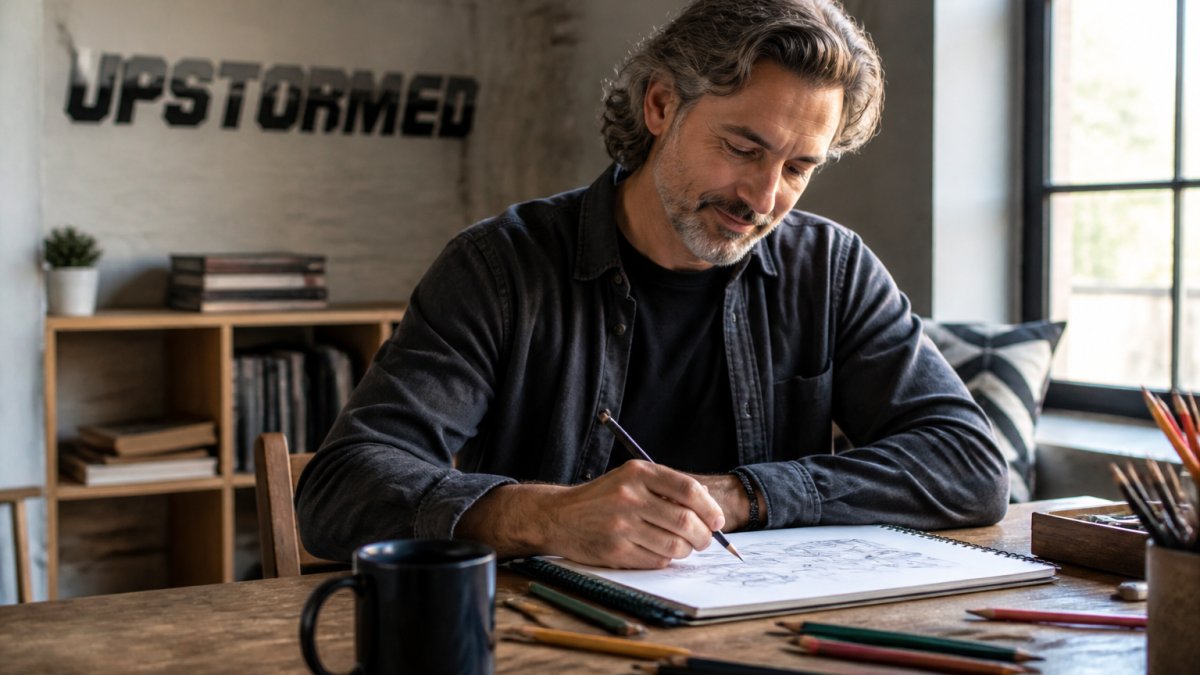
Most articles on this topic hand you one broad list and call it done. That misses a real problem: a novelist, a painter, a singer, and a total beginner do not experience self-doubt the same way, and the activity that quiets doubt for one can feel pointless to another.
Doubt for writers usually sounds like "this sentence is bad and therefore I am bad." The fix is to separate drafting from judging.
Visual artists often freeze at the blank page because every mark feels permanent. Choose media that punish you less for experimenting.
Performers face doubt in real time, often in front of people. The work is less about the product and more about the body.
The biggest barrier for beginners is the belief that you need permission or talent to start. You do not.
Each of these activities lowers the bar for "good." That is the point. When the bar is low, you show up more often. And showing up is what builds resilience.
Neglected But Undefeated: The Life Of A Boy Who Never Knew A Mother's Love →
When doubt hits mid-project, most advice says "just keep going." That is not specific enough. Try this instead.
This works because it interrupts the spiral. You move from judging the work to doing the work. The five-minute limit matters, it is short enough that your brain cannot argue its way out of starting.
Your artistic voice is the combination of choices, themes, and quirks that make your work recognizable as yours. It is not something you invent. It is something you uncover by making a lot of work.
Here is how to speed up the process:
Voice takes time. Slow growth is normal. The artists you admire took years to sound like themselves.
Useful self-critique points to a specific fix. Unhelpful self-doubt points to your worth as a person.
That is the clearest line between the two.
Useful self-critique sounds like: "This paragraph is doing too much. Cut it in half." It is specific, actionable, and aimed at the work.
Unhelpful self-doubt sounds like: "I am not a real writer." It is global, personal, and aimed at you.
Ask yourself one question: Can I act on this thought? If yes, it is critique. If no, it is doubt, and it does not deserve your attention.
Self-doubt that lasts for weeks, disrupts your sleep, or keeps you from basic daily tasks may be more than a creative phase. In that case, talking to a licensed mental health professional is a smart move, not a weakness.
Signs it may be time to seek support:
If you are in crisis, call or text 988 to reach the Suicide & Crisis Lifeline in the United States. For ongoing care, a therapist or counselor can help you separate creative doubt from deeper patterns.
Creative work and mental health are connected. Taking care of one supports the other.
Doubt will not disappear. It will show up again on the next project, and the one after that. The goal is not to eliminate it. The goal is to keep creating anyway.
At Upstormed, we built our collections around that idea. Our autobiography Neglected But Undefeated: The Life Of A Boy Who Never Knew A Mother's Love is one example, a real story of resilience told without polish.

If you want to build creative confidence and self-belief with tools that support the work, browse Shop For Better for apparel, books, and music made for the journey. Free shipping on orders over $120.
Creative expression gives self-doubt somewhere to go. Instead of looping in your head, you put it on a page, a canvas, or a track. The act of making something, even imperfectly, builds evidence that you can act despite fear. Over time, that evidence becomes creative confidence. You also get distance from the doubt: once it is outside you, you can look at it, reframe it, and decide what to do next.
Try the Five-Minute Reset: set a timer and make one small thing with no goal beyond finishing. Or keep a Small Wins Log and write down one thing you made or tried each day. Both exercises work because they lower the stakes and give you a repeatable action. Do them for two weeks and you will have a record of showing up, which is the raw material of self-belief.
Your artistic voice is built, not found. Make a lot of work, notice what you keep returning to, and name those patterns out loud. Try art journaling prompts for self-discovery that ask what you care about, what you avoid, and what you would make if no one were watching. Self-doubt will show up anyway. Keep going, and the voice gets clearer with each piece you finish.
Anxiety and self-doubt often feed each other: anxiety narrows your focus to what could go wrong, and self-doubt supplies the evidence. For many people, creative habits and reframing help. If doubt or anxiety keeps you from working, sleeping, or leaving the house for weeks, talk to a licensed mental health professional. Creative practice supports mental health, but it does not replace therapy or medical care.
Doubt is not a signal to stop. It is a signal that you are making something that matters to you. If you are ready to move through it with style and support, Upstormed offers curated apparel, books, and music built for people who keep going. Explore our collection, find pieces that speak to your story, and take the next step in your creative life. Get started with Upstormed and keep creating through the doubt.

The most flattering pair isn’t necessarily the one with “slimming” on the label. Shopping for rip...

Ethical fashion: Learn how to shop ethically and sustainably.

Curated self improvement boxes for adults combine books, journals, and wellness tools. Learn how ...

 Account
 Cart
Cart