

11 Oct
2026
Last Updated: October 11, 2026
Ethical fashion means making clothing choices that consider the people, environment, and communities involved in production. When you choose ethical fashion, you're supporting brands that prioritize fair labor practices, minimize environmental damage, and create garments built to last rather than designed for disposal.
The fashion industry produces roughly 92 million tons of textile waste annually, mostly from fast fashion's model of rapid production, low prices, and disposable clothing. Ethical fashion rejects this by emphasizing conscious consumerism: knowing where your clothes come from, who made them, and what impact they have.
Ethical fashion is a practice, not a purity test. Small shifts in how you shop, what you buy, and how long you keep things create meaningful change.
Greenwashing happens when brands make vague sustainability claims without backing them up. Learning to spot these red flags protects both your wallet and your values.
Red Flags to Watch
Watch for claims without evidence.
Misleading phrases like "eco-conscious," "green," and "planet-friendly" have no legal definition in fashion.
If a brand claims ethical production but sells at fast-fashion prices, something doesn't add up.
A Framework for Verifying Claims
Step 1: Check for Third-Party Certifications
Look for third-party verification from organizations with transparent, audited standards. Brands that create their own certifications without independent auditing are rating themselves.
Legitimate certifications to look for include:
Check the certifying organization's website to verify current status rather than taking the brand's word for it.
Step 2: Trace Supply Chain Transparency
Ethical brands publish factory lists, locations, and worker counts. If a brand refuses to disclose where production happens, that's a major warning sign.
Brands serious about ethics share annual reports detailing environmental metrics and labor audits.
Step 3: Verify Material Claims
If a brand claims "sustainable materials," ask which ones and in what percentage. "Made with organic cotton" could mean 5% organic and 95% conventional.
Common Greenwashing Tactics to Reject
Understanding which materials align with ethical fashion helps you make decisions that reflect your values.
Comparing Materials Across Key Impact Areas
When choosing between materials, consider how each performs across these dimensions:
Organic Cotton
Organic cotton uses no synthetic pesticides or fertilizers, reducing chemical runoff.
Trade-offs: Organic cotton requires roughly 1,800 gallons per pound but is durable and breathable.
Best for: T-shirts, underwear, basics you'll wear frequently and keep for years.
Recycled Materials
Recycled polyester, wool, and cotton divert waste from landfills and reduce manufacturing emissions compared to virgin production.
Trade-offs: Recycling quality varies and some recycled fabrics break down faster than virgin counterparts. Recycled polyester still sheds microplastics when washed.
Best for: Outerwear, activewear, and items where you prioritize keeping existing materials in use over maximum durability.
Natural Plant Fibers: Linen, Hemp, Tencel
Linen and hemp require fewer chemicals and less water than conventional cotton.
Trade-offs: Linen wrinkles easily, hemp and linen are initially stiff, and Tencel is more expensive.
Best for: Linen works for summer clothing and items where wrinkles are acceptable.
Materials to Approach Cautiously
Conventional polyester releases microplastics when washed. Viscose production generates chemical waste; look for closed-loop Tencel instead.
A Decision Framework for Material Choices
Creating a sustainable wardrobe starts with intentional choices about what you bring home. Use this checklist when shopping to align purchases with ethical fashion principles:
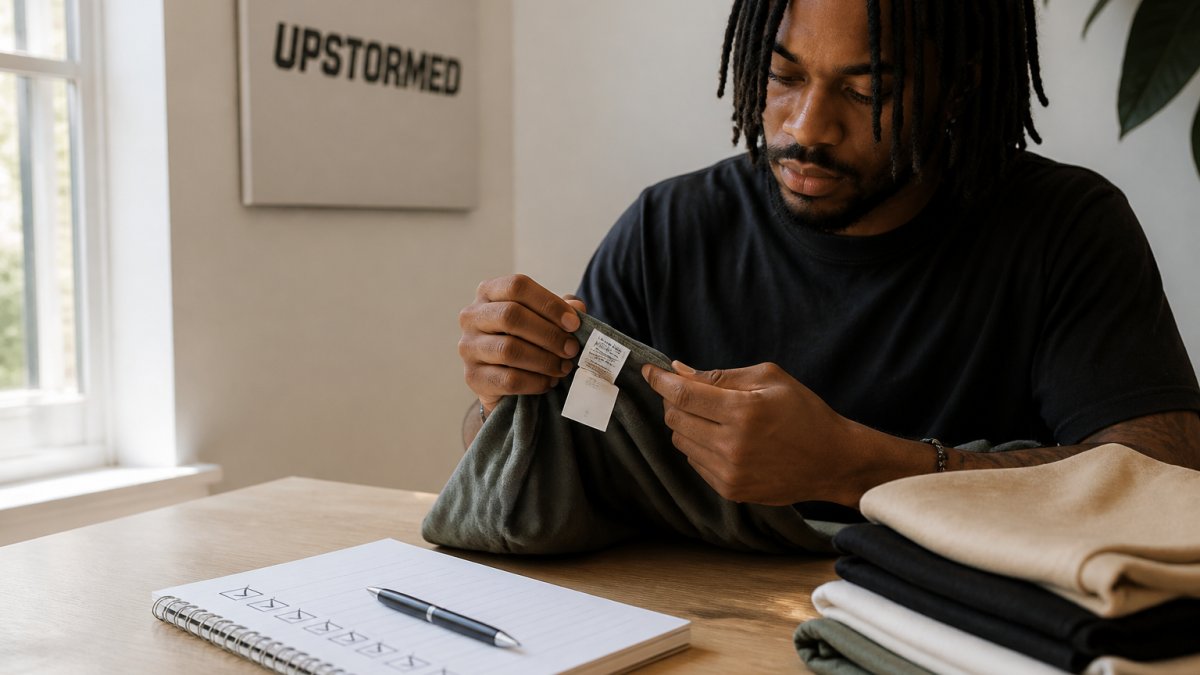
The strongest filter is the "30 wears test." Before buying, ask honestly: will I wear this at least 30 times? Garments worn frequently have lower environmental impact per wear, even if they cost more upfront. A $80 dress worn 100 times has a lower cost-per-wear than a $20 dress worn five times.
Ethical fashion doesn't require unlimited spending. Building a conscious wardrobe on a budget means prioritizing quality over quantity and being strategic about what you buy new versus secondhand.
Start with a neutral base of versatile pieces in classic colors. These form the foundation of outfits that work across seasons and styles. A well-fitting pair of jeans, basic tees, and neutral sweaters stay relevant longer than trend-driven pieces. Investing in quality basics means fewer replacements over time.
Buy new only when you can't find what you need secondhand. Prioritize new purchases for items that wear out quickly or where fit is critical, underwear, socks, foundational pieces. Platforms like Shop For Better can help you make more informed choices about where to invest in new pieces.
Care for what you own. Washing clothes in cold water, line drying when possible, and repairing small damage extends garment life dramatically. A shirt with a loose seam that's repaired can last years longer.
Set a realistic budget for ethical fashion and stick to it. Even modest spending on fewer, better pieces creates more impact than constantly replacing cheap items. Calculate cost-per-wear to justify spending more on garments you'll keep for years.
The most ethical clothing choice is wearing what already exists. Resale, rental, and repair extend garment lifecycles and keep textiles out of landfills while reducing demand for new production.
Buying secondhand clothes eliminates manufacturing impact entirely. Thrift stores, online resale platforms, and peer-to-peer sales offer endless options at a fraction of retail prices.
Renting makes sense for occasion wear and trendy pieces you'll wear once or twice. Formal dresses, seasonal jackets, and trend-driven items can be rented instead of purchased, stored, and eventually discarded. This model works especially well for children's clothing, which outgrows quickly.
Repair services and communities are growing. Tailors can adjust fit, replace zippers, and restore structure. Shoe repair extends the life of quality footwear. Clothing swap groups let you trade items with friends and community members.
When clothing reaches true end-of-life, responsible disposal matters. Textile recycling programs accept worn-out garments and break them down for new uses. Donation to thrift stores gives garments a second life if they're still wearable. Composting natural-fiber textiles returns them to soil.
Ethical fashion starts with recognizing that every purchase connects you to real people and real environments. The choices you make, what you buy, how long you keep it, where it comes from, shape the industry's future. You don't need to be perfect. You need to be intentional.
Start small: audit your current closet, repair items you already own, and buy your next piece with intention. Use secondhand options first. Ask brands tough questions about their practices. Build a sustainable wardrobe that reflects both your style and your values. Over time, these choices compound into a wardrobe that feels good to wear and good to own.
Ethical fashion refers to clothing produced with consideration for people and the planet. It encompasses fair labor practices, safe working conditions, transparent supply chains, and environmental responsibility. Ethical fashion brands prioritize worker welfare, pay fair wages, and minimize harm during production. It's about knowing where your clothes come from and who made them, ensuring your purchases support responsible business practices rather than exploitative ones.
Look for third-party certifications like Fair Trade, Global Organic Textile Standard (GOTS), or B Corp certification. Check the brand's website for detailed supply chain information, factory locations, and labor policies. Ask yourself: Do they disclose where items are made? Do they publish sustainability reports? Are wages and working conditions documented? Transparent brands readily answer these questions. Be skeptical of vague claims like 'eco-friendly' without supporting evidence, this is often greenwashing.
Prioritize quality, durability, and timeless design over trends. Check fabric composition for natural or recycled materials. Examine construction quality, strong seams and quality stitching mean longer wear. Consider cost per wear: a higher-priced durable garment worn for years costs less per use than cheap items replaced frequently. Look for brands that share production details, certifications, and care instructions. Choose pieces that fit your lifestyle and can be mixed with existing items rather than impulse purchases.
Start by buying less and choosing quality basics over trends. Shop secondhand through thrift stores, consignment apps, and resale platforms, you'll find quality pieces at a fraction of retail price. Extend garment life through proper care and repair rather than replacing items. Build a capsule wardrobe of versatile pieces that work together. When buying new, prioritize one or two ethical brands you trust over many cheap options. Focus on cost per wear: a $50 shirt worn 100 times costs 50 cents per wear, while a $20 shirt worn twice costs $10 per wear.
Ethical fashion focuses on people: fair wages, safe working conditions, and transparent labor practices. Sustainable fashion focuses on the planet: reducing environmental impact, using eco-friendly materials, and minimizing waste throughout production. The best brands address both. A garment can be ethically made but use unsustainable materials, or be made from recycled fabric but in exploitative conditions. True conscious consumption requires evaluating both dimensions and understanding the trade-offs.
Secondhand shopping is one of the most ethical choices you can make. Buy vintage and preloved items from thrift stores, consignment shops, and resale platforms. Rent formal wear or special occasion outfits instead of buying once. Swap clothes with friends or participate in clothing exchange events. Repair and alter existing pieces to extend their life. These approaches eliminate demand for new production, reduce textile waste, and typically cost far less than buying new ethical brands.
Ready to build a wardrobe that reflects who you are? Explore Upstormed's curated collections designed to inspire personal growth and express your authentic style. With free shipping on orders over $120, you can start building an ethical wardrobe that empowers you to live boldly. Shop now and discover how fashion, literature, and music can work together to uplift your spirit.

The most flattering pair isn’t necessarily the one with “slimming” on the label. Shopping for rip...

Overcoming self doubt with creative expression: practical exercises, journaling prompts, and a cl...

Curated self improvement boxes for adults combine books, journals, and wellness tools. Learn how ...

 Account
 Cart
Cart