

15 Oct
2026
What if the right jeans rise isn’t the one a style rule says you should wear, but the one that lets you move with ease? Rise labels can be confusing, especially when brands use different measurements and a waistband that feels fine standing up starts digging in when you sit. This women's jeans rise guide puts comfort and personal style first.
You’ll learn how low-, mid-, and high-rise jeans differ, where each waistband generally sits, and how to compare measurements when a label doesn’t tell the whole story. You’ll also see how rise differs from leg shape and inseam, so you can focus on the fit detail you’re actually comparing.
Finally, use a practical try-on check to assess the waistband through everyday movement, from sitting to walking. Get clear on the terms, trust what feels good, and choose a rise that works for your routine and style.
Rise describes where a pair of jeans sits on your body, not the shape or length of its legs. Two pairs can have the same leg shape but different rises, or similar rises with completely different leg cuts. Keeping these details separate makes it easier to compare the fit you want.
The key measurement is the front rise: the distance from the crotch seam to the top edge of the front waistband. It gives you a useful indication of waistband placement, but it doesn’t determine the whole fit or how the jeans will feel as you move.
Find the point where the inner-leg seams meet. That’s the crotch seam. Measure from there upward along the front fly to the top of the front waistband. To compare a product measurement with jeans you own, lay both pairs flat and use the same starting and ending points.
Front rise: crotch seam to top of front waistband.
Inseam: crotch seam down the inside leg to the hem.
These measurements answer different questions. Rise describes waistband placement; inseam describes leg length. The back rise is measured separately, from the crotch seam to the center of the back waistband. Its length can affect how much coverage the jeans provide at the back.
Follow the front fly, not the inside leg seam. A measurement is only useful when you know what it describes.
Low, mid, and high are useful shopping categories, but they aren’t universal measurements. Brands can use different patterns and label similar measurements differently. Waistband shape and garment construction can also affect where jeans sit on your body.
Treat a label as a starting point, not a promise. If product details include a front-rise measurement, compare it with a pair you already find comfortable. Use a similar size where possible, and match the measuring points. Comparing different sizes or measuring from different places can make the result misleading.
Even matching numbers don’t guarantee an identical feel. Waistband shape, crotch-seam placement, and the overall cut all influence how jeans settle when you stand, sit, or bend. Denim styles have shifted across eras, as the history of jeans shows, but your own comfort is a more useful guide than a label’s reputation.
Use the measurement to estimate placement, then check how the jeans feel on you. The number helps you compare; the fit tells you whether the pair works for you.
Rise changes where the waistband rests, which can affect how covered or secure you feel as you move. There’s no winning category. A low waistband may feel natural to one person, while another prefers fabric sitting closer to the waist. Choose based on comfort, not a body-shape formula.
These ranges are reference points, not universal standards. Brands may measure or label rises differently, and the same category can feel different depending on the cut and construction.
Low rise: Typically about 7-9 inches; sits lower on the waist, closer to the hips. Consider whether your usual tops feel comfortable with this waistband placement.
Mid rise: Typically about 9-12 inches; sits between low and high, often around the natural waist or navel. Consider how you like to wear tops with this position, tucked in or untucked.
High rise: Typically 12 inches or more; sits higher on the waist, at or above the navel. Check how the waistband feels with your usual tops, both tucked and untucked.
Use these measurements as a rough map, not a verdict. The history of denim fashion shows how denim styles evolve; personal preferences can change, too.
Low-rise jeans have a waistband positioned lower on the waist, nearer the hips than the navel. That means less fabric around the midsection, which some people prefer; others want more coverage or a higher waistband. Neither preference needs explaining. To assess the fit, sit, bend, and walk in the jeans. The label alone can’t tell you how the waistband will move with you.
Mid-rise sits between the lower position of low rise and the higher placement of high rise. Depending on the garment and wearer, it may feel like a comfortable middle ground, or it may not feel right. High rise brings the waistband farther up the torso. As you sit, stand, or tuck in a top, notice pressure, shifting, and whether the waistband remains comfortable. Cut, fabric, and construction matter alongside rise.
Try on the jeans with an outfit you actually wear. If you often tuck in a shirt, check how the waistband feels with fabric tucked beneath it. If you prefer untucked tops, see whether the waistband and top length work together. These small tests help you judge the jeans in a real-life context.
There’s no single best rise. Compare options in women's jeans, and keep your comfort checklist in mind. Choose a waistband that lets you move with confidence.
Your comfort matters more than a body-shape formula. Rise isn’t a rule about what you’re allowed to wear; it’s one part of how jeans feel and fit. Use the rise label as a starting point, then let your preferences lead.
The best rise is the one that feels secure without restricting movement. To find yours, pay attention to the waistband and how you usually wear your clothes:
Rise is one part of the fit, not the whole story. Leg cut, waistband shape, fabric, and construction can all affect how jeans feel and look. Even pairs with similar rise measurements may wear differently. Judge the complete fit rather than relying on one number or an assumption about how a particular rise should suit you.
Try the jeans in positions you use throughout the day: sit down, stand up, and bend as you might to reach for something. Notice whether the waistband presses, shifts, gaps, or feels easy to forget. If you keep pulling it into place, take note. Judge the fit against your own routine, not someone else’s.
A waistband that feels fine while standing may feel different when you sit. Pause and check for pressure or shifting before deciding. Comfort is about how the jeans move with you, not just how they look in a still pose.
Consider your usual tops. If you often tuck them in, check how the waistband feels with fabric tucked beneath it. If you prefer untucked layers, see how the waistband and top length work together. Different rises change where a top meets the jeans and can alter an outfit’s proportions, but there’s no single correct pairing.
A higher waistband might work with a go-to tucked-in shirt; a lower one may feel more natural with a longer, loose top. Treat these as options, not instructions. Your wardrobe, comfort, and confidence are the guide.
Make the choice in your own terms: feel the waistband, test your movement, and picture the outfits you’ll reach for. The right rise isn’t about meeting a rule. It’s about feeling at ease in the jeans you choose.
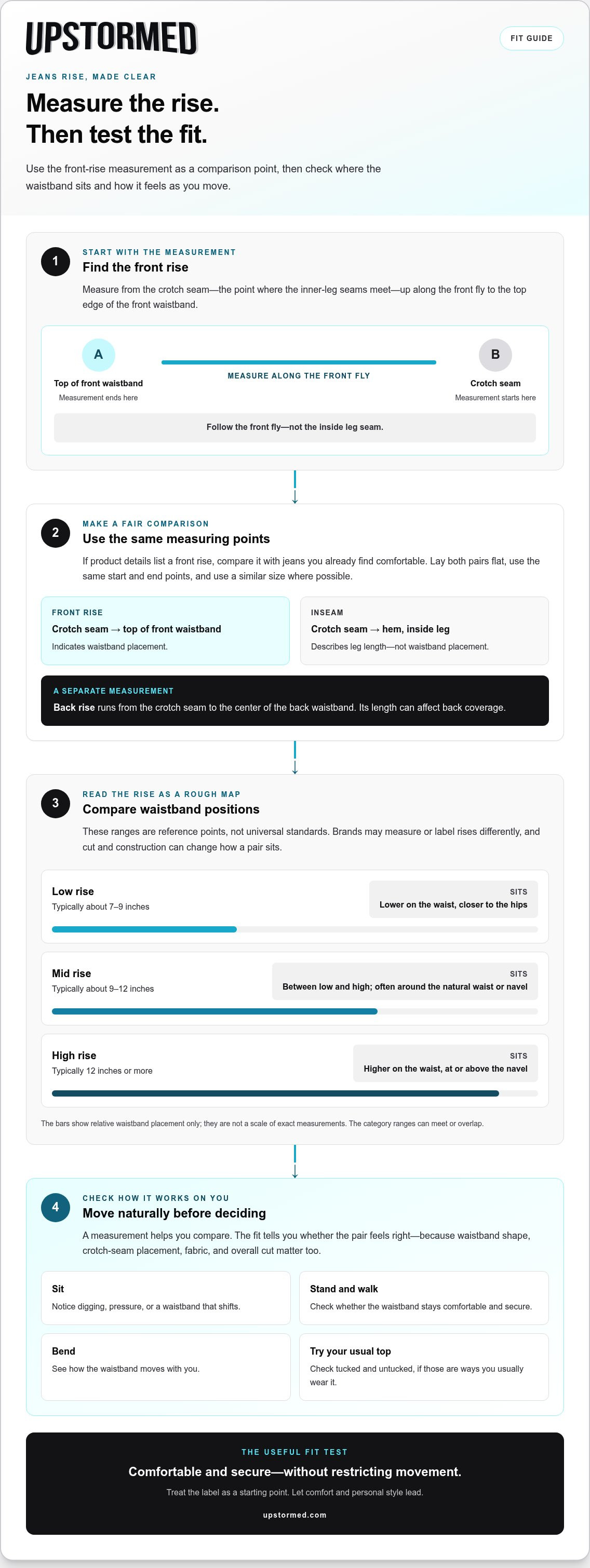
A measurement helps you compare jeans, but it can’t replace trying them on. Use both: start with the numbers, then see how the waistband feels on your body. This practical check helps separate waistband placement from other fit questions.
Follow these four steps:
Keep these fit questions distinct. The waistband can sit at a comfortable height while feeling too tight around the waist. Tightness at the hips or thighs doesn’t automatically mean the rise is wrong, and leg length is a separate measurement. Identify what feels off before deciding whether the overall fit works.
Lay a familiar pair flat without stretching the fabric. Find where the inner-leg seams meet, then measure from that crotch seam up along the front fly to the top edge of the front waistband. Compare those points with the listed front rise of the jeans you’re considering.
For a useful comparison, choose a familiar pair in a similar size and remember that construction can differ. A matching measurement is a guide, not a guarantee of how another pair will fit.
Stand in a relaxed posture first. Notice where the waistband sits without pulling the jeans higher or lower. Then sit, bend, and take a short walk. Does the waistband pinch, slide, or make you want to readjust it? Separate pressure caused by waistband placement from tightness across the waist, hips, or thighs.
Jeans should work beyond a still fitting-room pose. Give yourself room to move, and be honest about what feels comfortable.
Measurements offer a starting point; movement gives you the rest of the answer. Ready to compare styles? Browse women's jeans and use this check as you shop.
You’ve got the essentials: rise describes waistband placement, labels can vary between brands, and a try-on reveals what a measurement can’t. Use this women's jeans rise guide as a tool, not a set of rules. No rise is right for everyone. Choose the one that feels comfortable and suits the way you want to dress.
Before deciding, look at the details for the specific pair. A style name alone doesn’t tell you exactly where its waistband will sit. If garment measurements and fit details are provided, use them to compare, then see how the jeans feel when you move. A familiar label can point you in a direction, but your own experience makes the final call.
Pause before you choose. Can you describe where you prefer the waistband to sit? Does the pair stay comfortable through ordinary movement, without pinching or needing constant adjustment? Have you considered the garment’s measurements and fit details, where available? These questions keep your decision practical and personal.
If one answer gives you pause, take it seriously. Compare the jeans with a pair you already enjoy wearing, or identify what feels uncomfortable. Keep rise distinct from other fit factors, such as tightness at the waist or hips and leg length. Each detail matters, but each tells you something different.
Think about your routine and the clothes you reach for most. If you often tuck in tops, consider how the waistband feels with a shirt tucked beneath it. If you prefer loose layers, notice how the waistband sits with your usual top lengths. These are ways to explore your preferences, not instructions to follow.
Trends can offer inspiration, but they don’t set your comfort standard. Body-shape prescriptions don’t decide what belongs in your wardrobe, either. Choose a rise because it supports the way you want to feel and move, not because someone says it’s the only option for you.
When you compare jeans at Upstormed Shop, consider each garment’s own details rather than assuming its rise from the style name. Comfort is personal, and style belongs to you. Explore women's jeans at Upstormed Shop and wear what helps you move through your day with confidence.
Let your next pair be a choice you make for yourself. Notice what feels good, trust that feeling, and give yourself permission to change your mind as your comfort or style shifts. This guide is here to support your decision, not make it for you.
As you browse, look at each pair’s details and imagine wearing it through an ordinary day. Upstormed Shop offers women's jeans, including Ripped Slimming Jeans For Women. Explore the selection with your preferences in mind.
Explore women's jeans at Upstormed and choose the pair that feels right for you.
Front rise is generally measured from the crotch seam to the top of the front waistband, with the jeans laid flat. Back rise uses the same starting point but ends at the top of the back waistband. To compare a product measurement with jeans you own, lay both pairs flat and measure from the same points. The number is a helpful reference, not an exact prediction of where the waistband will sit.
It can. As a garment moves between sizes, its proportions may change, and brands don’t all adjust their patterns in the same way. Two sizes with the same rise label might place the waistband differently. Measurements for the specific size are more useful than relying on the label alone. Fit details and a try-on can help you judge the actual feel.
Front rise measures from the crotch seam to the top of the front waistband; back rise measures from that seam to the top of the back waistband. They describe different sections of the jeans. A pair might feel comfortable at the front but provide less back coverage than you prefer. Waistband shape and overall construction also affect fit, so neither measurement tells the whole story by itself.
A rise may feel too short if the crotch or waistband feels restrictive when you stand, sit, or bend, or if you keep adjusting the jeans to get comfortable. Check whether the waistband itself feels tight and whether your hips or thighs also feel restricted, since these can affect the overall sensation. If movement remains uncomfortable, a different rise or cut may feel better.
Yes. Height alone doesn’t determine the right rise. People of the same height can prefer different waistband positions, and a pair may sit differently on different bodies because proportions and garment construction vary. Focus on where the waistband lands and how it feels on you rather than following a height-based rule. A familiar, comfortable pair can help you identify the placement you like.
No single rise feels best for everyone while sitting. The experience depends on how the jeans are constructed and how the waistband fits your body. Sit in a natural position, then stand and bend. Notice whether pressure builds, the waistband shifts, or you need to readjust. A pair that stays comfortable through the movements in your routine is a better choice than one selected by its rise label alone.
Don’t count on jeans stretching into a different rise. How much a garment changes depends on its fabric and construction, so assess the waistband as it feels when you try the jeans on. If the placement feels uncomfortable, consider whether the size, cut, or construction is contributing to the problem. Follow the garment’s care instructions and choose a fit you’re comfortable wearing.

Article by
Jonathan Anthony Burkett
Jonathan Anthony Burkett was born in 1987. He is a bright writer inspired by many, as he continues to struggle in life. Devoted for achievement in his lifetime, he is willing to take any test. He told himself, that he would never give up no matter the trials and tribulations. He decided to write to help him move towards a bright future for himself; and because he knows that s what his Grandparents want for him.
Learning now that life is a challenge for many, with trials, tribulations, brutality, hatred, along with grief and manipulation. Jonathan is writing now to release his thoughts about life, after being motivated, inspired to prosper, encouraged to tolerate, uplifted, and empowered from his past.

What if ripped jeans could feel just as pulled-together as your favorite tailored pair? The best ...

Digital research tools offer an accessible way to separate a historical decipherment from modern ...

October’s campaign offers a useful moment to make independent verification easier in everyday fam...

 Account
 Cart
Cart