

07 Oct
2026
Last Updated: October 7, 2026
Finding your personal style is the practice of noticing what you already reach for, then building on it on purpose, one of the most reliable ways to express personal identity through style.
Most style advice starts with shopping. That is backwards. The best ways to express personal identity through style start at home, with what you already own.
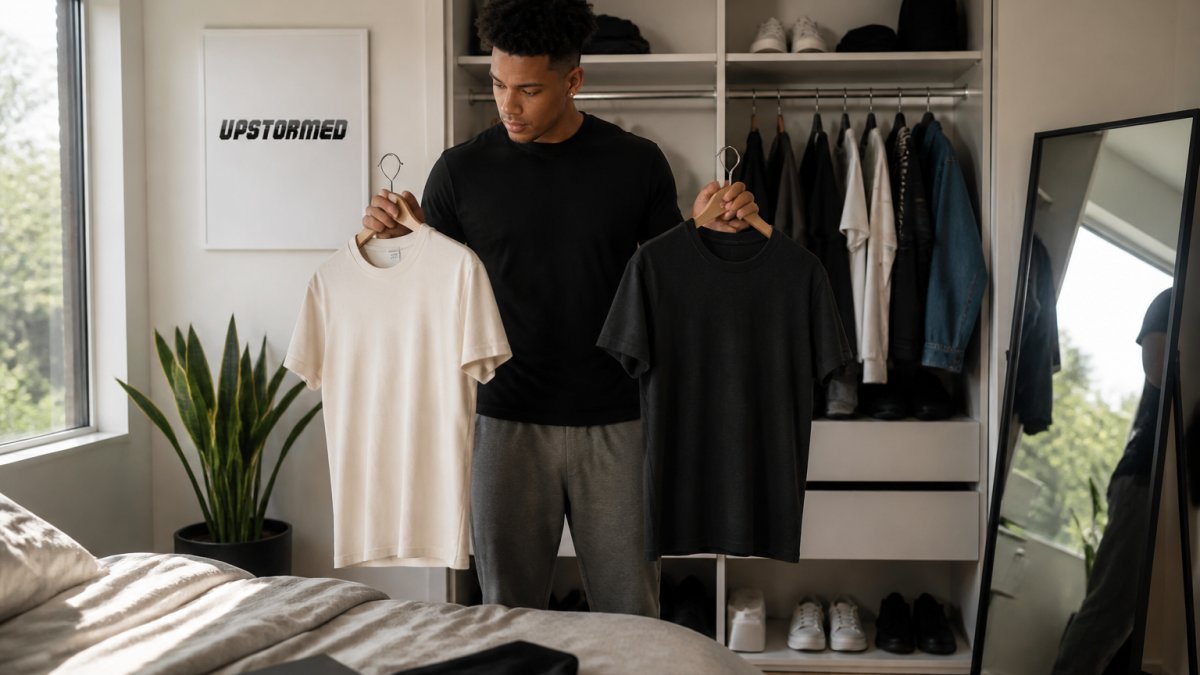
A wardrobe audit means pulling everything out and sorting it into three piles: keep, repair, and release. It takes about an hour and costs nothing.
Ask three questions of each piece:
Most people find that a small share of their closet does most of the work. That is your real style talking.
Style anchors are the pieces you reach for again and again. They reveal your personal taste faster than any quiz.
Look for patterns in your keep pile:
Write down three anchors. Build your next outfits around them.
Fashion is nonverbal communication. Your clothing choices send signals about your personality, values, and mood before you speak.
Think about what you want your outfit to say. Approachable? Sharp? Creative? Then choose pieces that carry that message.
A few ways to communicate without words:
Our DIY Letter Pendant Necklace Accessories let you wear a letter that means something to you, in stainless steel with an electroplated finish.


What you wear changes how you carry yourself. Many people find that dressing in line with their identity lifts confidence and self-esteem, because the outside finally matches the inside.
DIY Letter Pendant Necklace Accessories →
Confidence does not come from expensive clothes. It comes from clothes that fit well and feel like you.
Try these personal style tips:
Experimentation is how you find what works. Start small and low-risk.
Our First Love Full Size Multicolor Heart Pattern Knitted Vest is an easy way to test pattern and color without rebuilding your whole wardrobe.
A wardrobe that reflects your personality is built around your anchors, not around trends. It should cover your real life: work, weekends, and special occasions.
Start with a base of neutral pieces, then layer in the things that feel like you.
| Wardrobe Layer | What It Does | Example Pieces |
|---|---|---|
| Base | Covers daily needs | Plain tees, straight jeans, simple knits |
| Anchor | Shows your taste | Signature color, favorite shape |
| Statement | Adds personality | Printed denim, bold vest, unique jewelry |
| Sentimental | Tells your story | Letter pendant, heirloom ring |
Our RISEN Full Size High Rise Star Printed Frayed Hem Jeans sit in the statement layer. The star print and raw hem add edge while the high rise keeps the fit flattering.

You can express identity through style and still respect a dress code. The two are not in conflict. The trick is knowing where your freedom lives and how to use it deliberately.
Most dress codes set a floor, not a ceiling. They tell you what is required, not everything you are allowed. Read the policy for what it actually prohibits, then build your expression inside those boundaries.
Different codes leave different amounts of room. A common pattern is:
When a policy is vague, ask one question: "What would get me sent home?" Everything outside that answer is your room to work.
Even in a strict setting, these areas tend to stay open:
A structured outfit in a neutral color can still feel entirely yours. Add a pendant, a ring, or a bold pair of shoes. Identity lives in the details.
Sometimes a dress code clashes with who you are, a religious head covering, a cultural garment, a gender expression, or a needed accommodation. In those cases, the goal is not to hide but to communicate.
DIY Letter Pendant Necklace Accessories →
This matters across body types, ages, abilities, and gender identities. Style is not one shape or one age. It is yours to define, and it can be defined inside the rules, not only outside them.
You do not need a big budget to express who you are. In fact, some of the strongest personal style comes from working with what you have. The unique angle here is that budget and sustainability are not compromises on identity, they are often the fastest route to a wardrobe that actually looks like you.
Before buying anything, estimate how many times you will wear it in a year. Divide the price by that number. A $90 jacket worn 60 times costs $1.50 per wear. A $25 top worn twice costs $12.50 per wear.
This single calculation changes what you buy. It pushes you toward pieces that fit your anchors and your real life, not toward whatever is on sale.
A single well-made piece you love beats five cheap ones you forget. That is also better for the planet, and it makes your style more consistent because every piece has earned its place.
The hardest part of style is not finding trends. It is trusting your own taste when the world keeps shouting about what is "in."
Your wardrobe should tell your story, not someone else's. Start with an audit, find your anchors, and build outward from there.
At Upstormed, we built our collections to help you do exactly that.
Get started with Upstormed and build a wardrobe that finally feels like you.
Clothing communicates identity through color choices, silhouettes, fabrics, accessories, and the overall combinations you assemble. Someone drawn to vibrant colors and unconventional combinations may be signaling creativity and openness, while a person who prefers monochrome, structured outfits may be expressing minimalism and focus. Accessories like personalized jewelry, a DIY letter pendant necklace, or a vintage-inspired ring add another layer of specificity. The key is that each choice reflects personal taste, values, or cultural background rather than following trends by default.
Start with a wardrobe audit. Pull everything out and sort items into three piles: pieces you wear often, pieces you love but rarely wear, and pieces you never reach for. The first pile reveals your actual habits. The second reveals aspirational identity. The third shows what does not fit your life right now. From there, look for repeating colors, fabrics, and silhouettes. Those patterns are your style anchors. Build future purchases around them instead of chasing trends that do not match your daily reality.
Focus on pieces that align with your values, comfort needs, and daily activities. If sustainability matters to you, prioritize quality fabrics and versatile cuts that last. If self-expression is the goal, invest in statement pieces like a star-printed frayed hem jean or a multicolor heart pattern vest that spark joy every time you wear them. The goal is not a perfect capsule wardrobe; it is a collection where every item feels like a deliberate choice rather than a compromise.
Dress codes set boundaries, but they do not erase individuality. Within a business casual or formal framework, you can express identity through accessories, color accents, fabric textures, and fit. A structured blazer in an unexpected color, a distinctive ring, or a patterned scarf can carry personal meaning without violating policy. The trick is to treat constraints as creative prompts: what can you change within the rules that still feels unmistakably you? That is where authentic style lives.

Empowering apparel women over 40: Discover empowering apparel for women over 40 that builds confi...

Find the best statement dresses for parties, dinners, weddings, and getaways, with easy tips on c...

Learn how to stay motivated during challenges with 7 practical steps: goal setting, daily habits,...

 Account
 Cart