

24 Oct
2026
Last Updated: October 23, 2026
Quick Summary
You can manage stress without medication through breathing exercises, mindfulness, daily movement, quality sleep, and balanced nutrition. These natural methods activate your nervous system's ability to calm itself and produce noticeable changes within 2-4 weeks of consistent practice.
Stress shows up as tension, racing thoughts, sleep trouble, or constant overwhelm. Many people reach for medication first, but you can manage stress without medication through real alternatives you can start today without a prescription.
Natural ways to manage stress instead of medication tap into your nervous system's ability to calm itself. They're free or low-cost and build skills you'll use for life.
Deep breathing activates your parasympathetic nervous system: slow your breath and your heart rate drops, muscles relax, and your mind settles within minutes (ncbi.nlm.nih.gov). It's the fastest way to relieve stress, and you can do it anywhere, at your desk, in your car, or at 3 a.m. with racing thoughts. No equipment needed.
This technique balances your nervous system and quiets anxious thoughts.
How to do it:
The long exhale is what calms you. Practice once or twice daily, starting with 4 rounds and building up.
Box breathing works fast. It's used by athletes, military personnel, and anyone needing quick focus.
How to do it:
The equal counts create rhythm, and your mind stops spiraling when it focuses on counting. Do this whenever tension builds or you can't focus.
Mindfulness means paying attention to the present moment without judgment, noticing your breath, body, and surroundings without trying to change them.
Mindfulness reduces anxiety because worry lives in the past or future. When you anchor yourself to now, stress loses its grip.
Start small:
Many people find a tactile anchor helpful. Touch each bead slowly and breathe to stay present.
Movement is one of the most powerful stress relievers available.
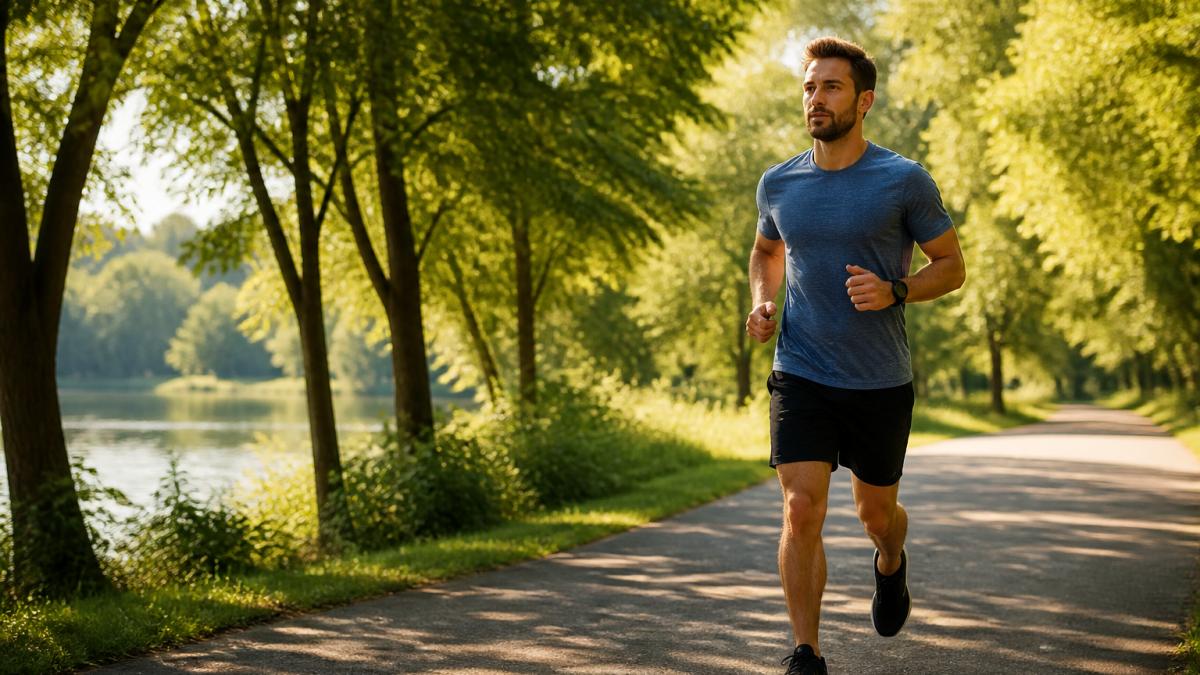
You don't need intense workouts. Walking, stretching, dancing, or casual sports all work.
What counts as stress-relieving exercise:
The best exercise is one you'll actually do. Consistency matters more than intensity: three 20-minute sessions beat one intense hour followed by a skipped week.
For those building an active lifestyle, wear what makes you feel confident during your practice.
Sleep, food, and daily habits form the foundation of stress management. When these basics slip, stress hits harder; when they're solid, you handle challenges better.
Poor sleep amplifies stress. Good sleep builds resilience. The relationship runs both ways: stress fragments sleep, and fragmented sleep lowers the threshold for stress the next day.
Sleep habits with the strongest support:
Most adults need 7-9 hours (the CDC). If you snore heavily, wake gasping, or feel unrefreshed despite adequate time in bed, mention it to a clinician, sleep apnea can masquerade as stress. Sleep improvements from habit changes typically show up over 1-3 weeks, so consistency matters more than any single "perfect" night.
What you eat affects your stress level. High-sugar and heavily processed foods spike energy, then crash, making stress feel worse. Whole foods stabilize mood and energy.
Foods commonly associated with calmer mood:
Be skeptical of claims that a single food "cures" stress; a balanced eating pattern, regular meals, and hydration do more than any one supplement. For many adults, more than about 200-400 mg of caffeine daily (roughly 2-4 cups of coffee) increases anxiety and sleep disruption, cut back gradually, since abrupt cessation causes headaches.
Natural does not mean risk-free. Before adding supplements or essential oils:
Sleep, nutrition, and lifestyle basics do most of the heavy lifting. Fix the fundamentals first, add supplements cautiously and with professional guidance, and give habit changes 1-3 weeks before judging results.
Learning to manage stress without medication works well for everyday pressure. But some situations need professional support.
Talk to a doctor if:
Stress and anxiety are different. Stress is a response to a specific situation. Anxiety is persistent worry that feels hard to control. Both are real.
Medication isn't weakness. It's a tool. Many people use both natural methods and medication together. A healthcare provider can help you figure out what you need.
The best plan is one you'll actually follow, built by matching the technique to your stress pattern. Here's a simple framework, tracking method, and clear escalation points.
Different stress patterns respond to different approaches. Use this quick guide to pick a starting point.
| Your pattern | Try first | Why it fits |
|---|---|---|
| Acute spikes (before a meeting, bad news, 3 a.m. racing thoughts) | 4-7-8 or box breathing | Fast, portable, works in minutes |
| Ongoing background tension (tight shoulders, short fuse) | Daily movement plus a 2-3 minute mindfulness anchor | Addresses accumulated stress hormones and builds tolerance |
| Sleep-related stress (can't fall asleep, wake at night) | Evening wind-down routine, caffeine cutoff, breathing in bed | Targets the sleep-stress loop directly |
| Worry-driven rumination | Journaling plus scheduled "worry time" | Externalizes thoughts and contains them to a set window |
| Low mood and low energy | Outdoor walking, daylight exposure, social movement | Combines activity, light, and connection |
If you're not sure, start with breathing for acute moments and daily movement for background stress. Those two cover the widest range of patterns.
| Week | Focus | Practice | What to track |
|---|---|---|---|
| 1 | Breathing | 5 minutes daily | When you used it and how fast you felt calmer |
| 2 | Add movement | 20 minutes daily | Energy and mood after each session |
| 3 | Add sleep basics | Consistent wake time | Sleep quality rating (1-5) |
| 4 | Assess and adjust | Keep what worked | Which practices you actually did |
After 30 days, you'll know what sticks. Some people love daily yoga. Others prefer walks. Some need both breathing and journaling. There's no single right way.
Simple tracking beats vague impressions. Each evening, rate your stress (1-10), sleep quality (1-5), and whether you did your practice (yes/no). After two weeks, look for patterns: which practices precede better days, and which days you skip and why. Well-supported approaches like exercise, breathing, and sleep consistency produce modest but reliable improvements over weeks; if a technique shows no benefit after 3-4 weeks, drop it and try another.
Self-care has limits. Talk to a healthcare provider if stress doesn't improve after 4 weeks of consistent daily practice, you can't sleep, eat, or focus for more than a few days, you have panic attacks or severe anxiety, you think about harming yourself, stress follows trauma or major loss, or you're using alcohol or other substances to cope.
Building resilience through daily habits is a process. You can learn how to build resilience through daily habits to deepen your practice, and many people find that practicing self-love daily strengthens their foundation for managing stress.
Managing stress without medication is possible. Breathing exercises, mindfulness, movement, sleep, and nutrition all work, they're free or cheap, and they build skills that last a lifetime. Start today with one technique, notice how you feel, and add another when you're ready, most people see real changes within 2-4 weeks. That's resilience: building a life where you handle challenges with more ease.
At Upstormed, we believe stress management starts with how you show up for yourself, through the clothes you wear, the music you listen to, and the books you read. Our curated collections are designed to inspire and uplift you as you build your personal resilience practice. Shop For Better and find the apparel, music, and books that support your journey toward greater calm and confidence.
Deep breathing exercises work within minutes. The 4-7-8 technique and box breathing activate your nervous system's calming response almost immediately. If you need relief in under five minutes, controlled breathing paired with stepping outside for fresh air and sunlight exposure can reset your stress response quickly. These drug-free strategies don't require equipment or preparation.
Yes. Slow breathing and breathwork signal your nervous system to shift from fight-or-flight to rest-and-digest mode. Research supports that deliberate breathing lowers cortisol and heart rate. Box breathing and 4-7-8 breathing are evidence-based techniques used by athletes and military personnel. Consistency matters more than intensity, even two minutes daily builds resilience over time.
Seek professional help if stress interferes with sleep, work, or relationships for more than two weeks, or if you experience physical symptoms like chest pain or persistent headaches. Stress and anxiety are related but distinct, anxiety often requires clinical care. If you're taking medication for anxiety or depression, never stop without medical guidance. A healthcare provider can determine whether natural strategies alone are sufficient or if additional treatment is appropriate.
Absolutely. Mindfulness doesn't require experience or special skills. Start with five minutes of guided meditation or simple body awareness exercises. Apps and free resources make it accessible. Even beginners report reduced anxiety and better focus within weeks. The key is regular practice, not perfection, your mind will wander, and that's normal. Consistency beats duration.

Denim trends 2026 bring relaxed fits, defined waists, dark washes, and confident styling ideas fo...

What jeans suit curves? Learn how rise, stretch, leg shape, and fit create comfortable, confidenc...

Is a minimalist wardrobe worth the effort? We break down the real costs, savings, and trade-offs ...

 Account
 Cart
