

17 Sep
2026
Last Updated: September 17, 2026
Does empowering clothing boost confidence? Yes, and the effect runs deeper than most people assume. Psychologists call this link between what you wear and how you feel fashion psychology, and it shows up in how you carry yourself, speak, and make decisions. This guide from Upstormed breaks down the research, the practical styling moves, and the budget-friendly ways to build a wardrobe that works for you.
What you wear to work changes how you perform, not just how you're perceived. A well-fitted outfit removes a layer of mental noise: no tugging at a hem, no second-guessing a color clash, no wondering if you look out of place. That freed-up attention goes toward the actual task.
Enclothed cognition is the psychological principle that the symbolic meaning of clothing affects the wearer's cognitive processes and performance. The term was coined by researchers Hajo Adam and Adam Galinsky, whose 2012 experiments established that what you wear carries meaning you internalize, and that the meaning, not the fabric, does the work.
Enclothed cognition is a genuine, replicated-in-part finding, but it is not a superpower. Most practitioners and researchers treat it as a modest, context-dependent nudge rather than a transformation. Three boundary conditions matter:
Fit is the single most underrated variable in this whole equation. A garment that fits properly signals care and competence to others, and it signals the same thing back to you. A common mistake is chasing trends or labels while ignoring fit, which is where most wardrobes quietly fail.
Finding your personal style means identifying the colors, cuts, and textures you reach for repeatedly, then building around those. Authenticity comes from your own patterns, not from copying someone else's aesthetic.
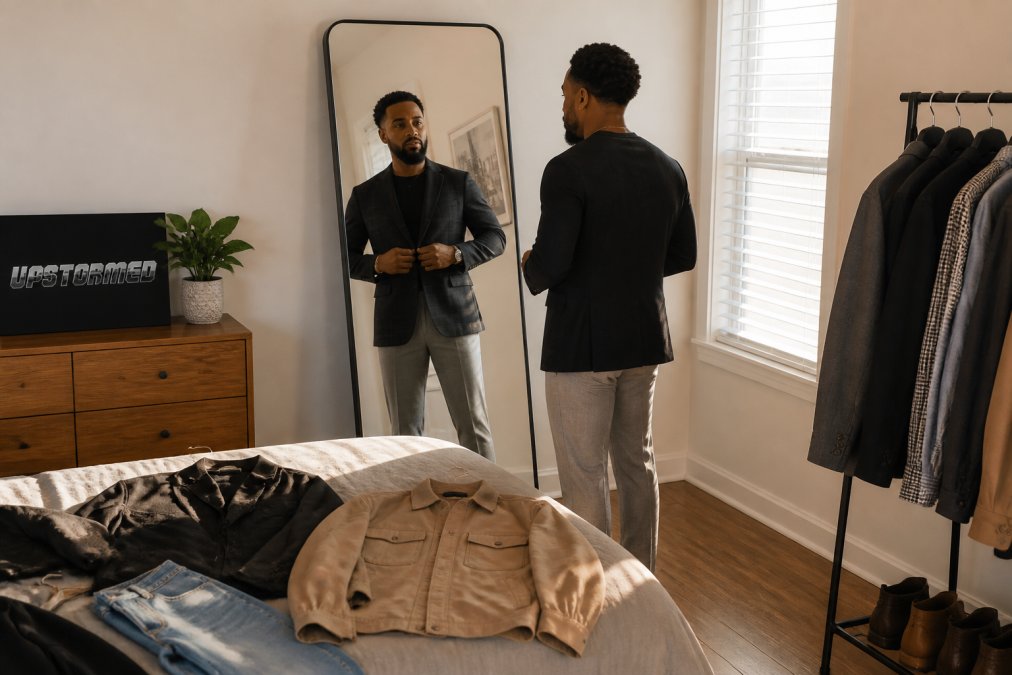
Color and texture function as tools for emotional regulation. Soft knits and warm tones tend to calm; structured fabrics and high-contrast palettes tend to energize. Neither is better, but matching the garment to the day's demands is a skill worth developing.
A confidence-boosting wardrobe is built on fit, versatility, and repetition, not on volume. You need fewer pieces than you think, and the ones you keep should work in multiple combinations.
Budget-friendly confidence hacks that actually hold up:
Sustainable fashion and confidence are more connected than they look. Buying fewer, better-made pieces reduces the churn of disposable clothing, and that stability supports a more consistent style identity. A wardrobe you've deliberately chosen is easier to trust than one assembled by impulse.
Wearing empowering clothing boosts confidence when the garment matches your self-concept. The mindset shift is treating clothing as a deliberate input rather than an afterthought.
Inclusive styling starts from the premise that every body deserves clothing that fits and flatters, and that confidence isn't reserved for a particular size, shape, or gender presentation. Body image improves when clothing stops being a source of friction and starts being a form of self-expression.
Gender-neutral and androgynous styling widens the option set instead of narrowing it. The confidence benefit is structural: when you stop filtering every purchase through "is this for someone like me," you make decisions based on fit, feel, and self-image rather than category.
The goal is a wardrobe where getting dressed doesn't require negotiating with your own reflection. That is a fit-and-meaning problem, and both are solvable.
Using fashion to boost confidence comes down to preparation and repetition. The more decisions you make in advance, the less mental load you carry on the day itself.
Yes, research on enclothed cognition shows that what you wear affects your psychological state. When you wear empowering clothing that you associate with authority or success, you tend to feel more self-assured. This isn't just a placebo effect; studies indicate that the symbolic meaning of the clothes influences your cognitive performance and self-perception. The key is choosing items that align with your personal style and the identity you want to embody.
The 3-3-3 rule is a practical styling guideline: choose 3 colors, 3 textures, and 3 accessories to create a balanced outfit. This framework helps simplify decision-making and ensures a cohesive look. For example, pair a neutral base with one accent color, mix a soft knit with structured denim, and add a watch, bag, and earrings. Following this approach can reduce morning stress and help you feel put-together, which supports building a confidence-boosting wardrobe.
Personal style affects how you present yourself and how others perceive you, which can impact professional outcomes. Wearing clothes that fit well and reflect your identity can increase your sense of capability and reduce distraction. In practice, when you feel good in what you wear, you're more likely to engage in meetings, speak up, and project professionalism. This doesn't require expensive suits; even a simple, well-fitted top like the GRATEFUL Long Sleeve Knit Top ($44.52) can make a difference.
Clothing can serve as a tool to manage social anxiety by shifting focus away from self-consciousness. Wearing an outfit that feels like armor, such as a structured jacket or a favorite graphic tee, can provide a sense of comfort and identity. The psychological benefits include feeling more in control and less distracted by negative thoughts. Start with small steps: choose one item that makes you feel good, like the You Give Me Butterflies Graphic T-Shirt ($37.00), and notice how it changes your mindset.
Confidence through clothing isn't about chasing a feeling, it's about building a system that supports one. Upstormed curates apparel, books, and empowering music designed to help you express your identity and meet hard days with resilience, with free shipping on orders over $120. Explore the Shop For Better collection and start building a wardrobe that works as hard as you do.

Learn how to get empowering lifestyle resources delivered to your door, from personal growth book...

Discover the best self improvement apparel for women in 2026, from leggings to motivational shirts.

Learn how to start a resilience journal with prompts, techniques, and daily practices that build ...

 Account
 Cart
Cart