

07 Sep
2026
Last Updated: September 7, 2026
The search for the best clothing for self expression starts with a simple truth: every outfit sends a message before you say a word. At Upstormed, we believe style is one of the most honest forms of self-discovery, and this guide will show you exactly how to use it.
Most people treat getting dressed as a chore rather than a creative act, leaving a closet full of clothes that feel hollow. When your aesthetic aligns with your inner self-image, you stand taller, speak clearer, and move with intention.
Below, we'll cover the psychology behind your choices, a three-step process for finding your style, and the specific pieces that make self-expression feel effortless. But first, here's what most style guides get wrong: they start with clothes when they should start with identity.
Fashion and identity psychology are inseparable. Clothing shapes how people treat you before a single conversation happens, acting as an external map of your internal world.
An extrovert might gravitate toward statement pieces and bright colors; an introvert often prefers comfortable, layered clothing. Neither is wrong. The problem arises when you dress for someone else's approval, abandoning your own instincts to chase a trend.
Research in the field of psychology of clothing and self-perception confirms that what we wear influences not only how others see us but also how we see ourselves. This "enclothed cognition" means your wardrobe is actively shaping your self-confidence and behavior. When you choose clothing that feels genuinely yours, you reinforce a positive self-image. When you wear things that feel foreign, you create internal friction.
Most style guides skip a critical step: they assume you already know who you are. Many people face an identity gap, the space between who they are internally and who they present externally, creating the unease you feel when you think, "I have nothing to wear."
People with a less defined sense of self often struggle more with clothing choices, flipping between styles or defaulting to safe neutrals. The clothing isn't the problem, the unresolved identity is.
The term "enclothed cognition" comes from a 2012 study at Northwestern University (northwestern.edu). Wearing a white coat described as a "doctor's coat" improved attention, while the same coat described as a "painter's smock" had no effect. It's not just the garment, it's the symbolic meaning you attach to it.
This mechanism works in three stages:
This is why "dress for the job you want" has psychological teeth. It's not superficial, it's a form of self-priming.
There's a meaningful difference between exploring who you are through clothing and performing an identity for others. Exploration is experimental and private; performance is public and approval-seeking.
Subcultural style is often a mix of both. The healthiest approach is to keep exploration dominant; when performance takes over, your wardrobe becomes a costume rather than a canvas.
To close your identity gap, answer these questions honestly, there are no wrong answers:
The last question is often the most revealing. Strip away social pressure and you'll find your baseline preferences, your starting point for building a wardrobe that aligns with your actual identity.
The goal is alignment. Your clothes should be an artistic expression of your current self, not a costume of who you used to be or who you think you should become.
Finding your personal style isn't about following a rigid formula. It's about observation and experimentation.
Sort everything you own into three piles: pieces you wear constantly, pieces you never touch, and pieces you keep "just in case." The first pile reveals the patterns, colors, and silhouettes you gravitate toward; the second shows what you think you should like versus what you actually enjoy.
Most people wear roughly 20% of their wardrobe 80% of the time. That 20% is your functional style, treat it as data and look for patterns:
These patterns form your style DNA, preferences your body already knows.
Write down three to five words that describe how you want to feel when you get dressed, "confident," "creative," "comfortable," "bold," or "elegant." These words become your filter, turning shopping from a guessing game into a targeted search.
Here's the twist most guides miss: add a second list of "anti-keywords", feelings you want to avoid, like "frumpy" or "invisible." If an item triggers an anti-keyword, it goes, regardless of how much you paid for it.
Keep both lists visible on your phone. When shopping, you'll have a clear reason to put down anything that doesn't match either list.
You don't need a full makeover. Pick one item that slightly stretches your comfort zone, wear it for a full day, and notice how it feels. Style evolution is a gradual process of testing and refining, not a single dramatic transformation.
To make this concrete, run a 30-day experiment. Here's the structure:

At the end of 30 days, you'll have concrete evidence of what works and a short list of items worth investing in.
A common frustration is feeling like you have to be a different person at work, at home, and at social events. You need a style system that adapts.
Think of your wardrobe as having three layers:
Your goal is to keep core pieces constant while context and accent pieces do the adapting. You're the same person in every room, just adjusting the volume, not changing the channel.
Your style is not static. It will shift as you change jobs, enter new relationships, age, and discover new interests, that's evidence that you're growing. Re-run this three-step process every 12 to 18 months, or whenever your wardrobe no longer fits who you are.
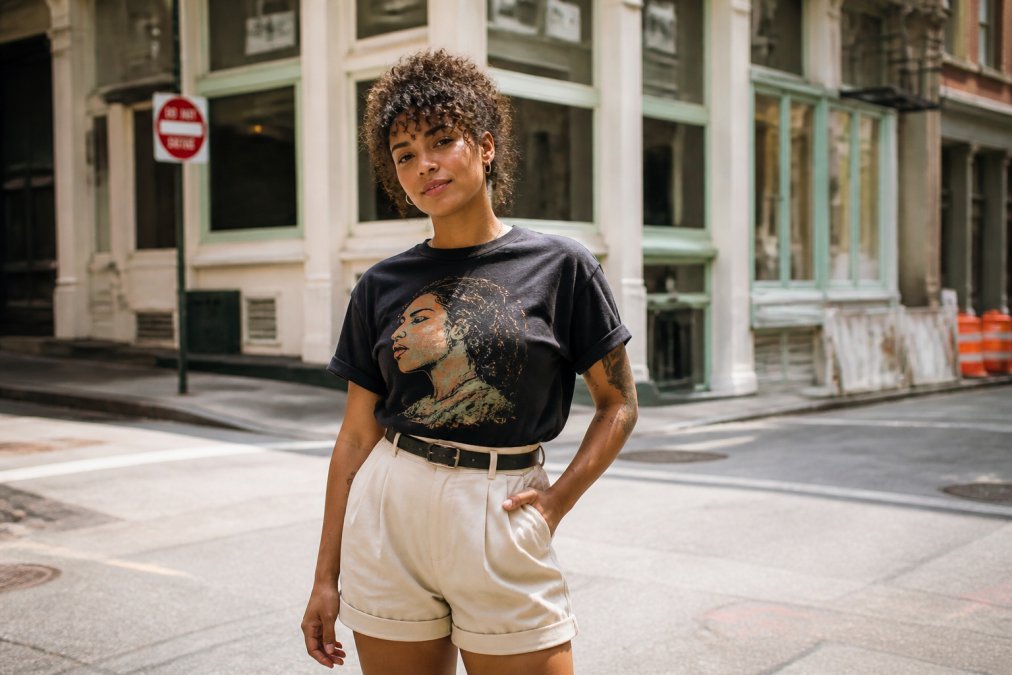
Certain clothing items are uniquely suited to carrying meaning. These seven pieces offer the most room for individuality.
A graphic tee is the easiest entry point for self-expression, a canvas for your interests, humor, and values. The mineB You Give Me Butterflies Graphic T-Shirt offers a delicate floral butterfly design that signals growth and transformation. Made from 100% cotton with a classic round neck, it pairs effortlessly with jeans or shorts.

For a more relaxed vibe, the Sweet Claire "More Beach Days" Oversized Graphic T-Shirt makes a lifestyle statement with its seashell illustration and positive slogan. The oversized fit with dropped shoulders adds comfort, making it a go-to for projecting ease and warmth.

When you want to command attention, a statement dress does the work. The VERY J Tropical Printed Cami Midi Dress captures vibrant, playful energy with its colorful print and flattering midi length. The ruched detailing and stretchy rayon fabric keep it comfortable while the bold pattern ensures you stand out.
Layering allows you to express different facets of your personality throughout the day. The ODDI Full Size Floral Balloon Sleeve Blouse adds a romantic, fashion-forward layer, dramatic balloon sleeves make a statement while the floral print keeps it approachable.
For cooler days, the Born To Make It Upstormed Hoodie blends comfort with a powerful affirmation. Its 100% cotton face and front pouch pocket deliver classic streetwear style while the message reinforces a resilient mindset.
A capsule wardrobe for self-expression is about curation over quantity, a collection of versatile, high-quality pieces that reflect your personal aesthetic and mix and match with ease.
Start with a neutral base of items that fit well. Then add expressive pieces like the Zenana In The Zone Full Size Dip Dye High Waisted Shorts in Blue, whose gradient effect and functional pockets make them a practical yet distinctive choice.
Ensure every item works with at least three other items in your closet. Instead of owning twenty pieces you feel lukewarm about, you own ten you love, each earning its place in your visual identity.
Many people struggle to express themselves through clothing because of internal barriers. Fear of judgment is the most common, the worry that a bold choice will draw unwanted attention leads to a "professional uniform" of safe, neutral clothing.
Another barrier is the belief that you're not "the type" of person who can pull off a certain look, often stemming from outdated ideas about body type or age. Self-expression has no age limit or size requirement.
The fix is to start small. Wear one expressive accessory in a low-stakes environment and notice that the world doesn't end. Each small success builds your self-confidence and weakens the barrier. If you're unsure where to begin, browsing curated collections like those at Shop For Better can help you discover pieces that resonate with the identity you're exploring.
Self-expression doesn't require a luxury budget. Creativity often flourishes under constraints, invest in a few quality statement pieces while keeping the rest of your wardrobe simple and affordable.
Look for sales, thrift stores, and online marketplaces for unique items at a fraction of retail price. The BiBi Striped Round Neck Short Sleeve Knit Top adds texture and visual interest without a hefty price tag, while the BiBi Round Neck Crochet Lace Sleeve Knit Top brings romance and elegance to any look.
The real secret to budget-friendly self-expression is focusing on fit and condition. A well-fitting thrift store garment will always look better than a poorly fitting expensive item. For a quick reference, keep this guide in mind:
| Wardrobe Goal | Best Piece to Start With | Key Feature to Look For | Budget-Friendly Tip |
|---|---|---|---|
| Casual Statement | Graphic Tee | Meaningful print or message | Shop sales and thrift stores |
| Bold Occasion | Midi Dress | Vibrant pattern, good fit | Rent for one-time events |
| Everyday Comfort | Oversized Hoodie | Soft fabric, affirming message | Buy classic colors that last |
| Layered Polish | Printed Blouse | Unique sleeves or texture | Pair with simple basics |
| Warm Weather Style | High-Waisted Shorts | Functional pockets, unique dye | Look for end-of-season deals |
Building a wardrobe that reflects your true identity is one of the most accessible forms of self-discovery. It challenges you to be honest about what you value and how you want to be seen, moving past the fear of judgment and the pressure of trends.
At Upstormed, we've built our brand around this exact principle, blending fashion with literature and music to support your personal growth and resilience. Our curated collections, like the affirming "Born To Make It" hoodie or the expressive graphic tees, are designed to uplift your spirit. With free shipping on orders over $120, building your expressive wardrobe is more accessible than you might think.
Get started with Upstormed and find clothing that speaks your truth, every single day.
Clothing acts as a mirror of your internal state and a signal to the outside world. When you wear pieces that align with your values and tastes, you reinforce your self-image and boost self-confidence. The fashion and identity psychology research shows that what you wear can shift how you carry yourself and how others perceive you, creating a feedback loop that strengthens your sense of self.
Start small. Identify one aspect of your personality you want to highlight, then choose a single piece that represents it. A graphic tee with a meaningful message or a bold printed dress are easy entry points. The key is to wear what genuinely resonates with you, not what trends dictate. As you build confidence, you can expand to more adventurous pieces.
Treat trends as inspiration, not instructions. Your personal style should be the foundation of your wardrobe. If a trend aligns with your aesthetic and feels authentic, incorporate it. If it doesn't, skip it. The goal of self expression through clothing is to look like you, not like a copy of a runway model. Trends fade, but a well-defined personal style endures.
Color is one of the fastest ways to communicate mood and personality. Bright colors like red and yellow project energy and confidence, while cooler tones like blue and green suggest calm and thoughtfulness. If you're an introvert, you might prefer understated neutrals, while an extrovert may gravitate toward bold hues. Pay attention to which colors make you feel most like yourself and build around them.
This guide was created to help you explore the connection between style and identity. For more inspiration on living boldly, explore our collections designed to empower and uplift.

Looking for a Goal Getter alternative for personal growth? Explore non-app tracking, self-love bo...

Discover lifestyle brands that support mental resilience through purpose-driven apparel, charitab...

Learn how to build resilience through daily habits with a practical framework covering exercise, ...

 Account
 Cart
Cart