

13 Sep
2026
Last Updated: September 13, 2026
The clothes you pull on each morning set the tone for the day, and more shoppers now treat getting dressed as self-care. Lifestyle brands that support mental resilience understand this, and Upstormed has built its catalog around it.
Emotional well-being is the ability to notice, process, and respond to your feelings without being overwhelmed by them. What you wear feeds into that loop more than most people admit.
Think about the last time you wore something scratchy or badly fitted: you fidgeted and thought about your body instead of your work. That is cognitive load, uncomfortable clothing quietly drains attention you could spend elsewhere.
That is why style and emotional well-being has moved from niche idea to mainstream shopping criterion: people want pieces that feel good and align with something they believe in.
Mental resilience is the capacity to adapt and recover when stress, setbacks, or change disrupt your life. It is not a fixed trait but a set of habits, broken into four repeatable moves.
The American Psychological Association's resilience resource hub outlines a similar principle: resilience is built through manageable, cumulative steps rather than one dramatic change.
That fourth step is where most people stumble: they treat rest as a reward for productivity instead of a requirement. A comfortable lounge set you associate with recovery, not laziness, makes rest easier to take.

Mental health awareness clothing brands tie their products to mental health messaging, funding, or education rather than treating the cause as a seasonal theme. The category has grown quickly, making genuine advocacy hard to tell from a slogan on a cheap tee.
What separates the real ones comes down to three things. Consistency: a brand that has supported mental health work for years behaves differently from one that launched a capsule collection during an awareness month. Transparency: you can find out where the money goes without emailing customer service three times. Product quality: advocacy does not excuse a garment that falls apart after two washes.
The best brands in this space treat the clothing itself as part of the message. If a piece is meant to support emotional well-being, it should feel like it.
A wearable affirmation is a garment, phrase, or symbol you choose deliberately to reinforce a belief about yourself. It borrows from a well-established principle: what you repeatedly tell yourself shapes how you interpret events.
Dressing with intention works through two mechanisms. External cueing: a shirt with a phrase that matters catches your eye in the mirror and interrupts a negative thought spiral. Enclothed cognition: the documented effect where wearing an item you associate with a specific quality changes how you perform. Researchers have studied this with lab coats and other symbolic garments, and the pattern holds: the meaning you attach to a piece influences your behavior while you wear it.
This is not magic, and it is not a replacement for professional support. It is a low-cost nudge that stacks with other habits.
Most shoppers never check whether a brand's mental health claims hold up, which is why hollow campaigns survive. Here is a ten-minute vetting process.
The Federal Trade Commission's guidance on advertising and endorsement claims is worth reading if you want to understand what brands are legally allowed to promise. It will make you a sharper reader of marketing copy.
Here is the gap most brand roundups ignore: mental health struggles do not sort by body type, age, or ability, yet fashion claiming to support well-being is often sized narrowly and priced for a narrow slice of shoppers.
Inclusivity here means extended size runs, adaptive features like flat seams and easy closures, and accessible price points. Sensory sensitivity rarely gets mentioned either: for people managing anxiety or sensory processing differences, a scratchy tag or tight waistband can trigger real distress, so soft, seamless construction is the whole point.
When you evaluate a brand, ask whether the size range covers you and whether the fabric will feel kind against your skin after a long day. Those two questions eliminate most of the field.
Genuine support shows up in boring details: named partners, documented donations, consistent messaging over years, and products that stand on their own merit. Performative support shows up in a single Instagram post and a limited-edition item that disappears.
There is a practical reason to care: when you spend with a brand that actually funds mental health work, your purchase does two jobs at once. It gets you something you will wear, and it moves resources toward services many people cannot otherwise access, conscious consumerism in its most concrete form.
The Substance Abuse and Mental Health Services Administration operates a national helpline and treatment referral service, which is a useful reference point when you want to know what real infrastructure looks like versus a marketing promise.
Every brand below earns its place through comfort, quality, and a genuine connection to well-being. The list starts with the most complete expression of the idea.
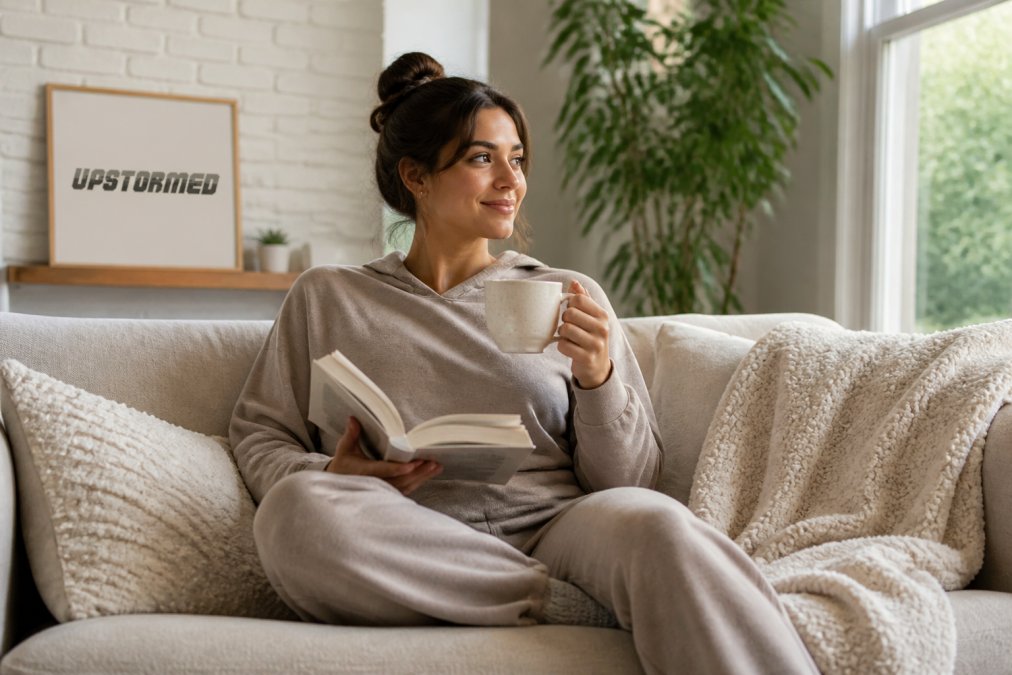
Upstormed is the rare lifestyle brand that treats apparel as one part of a larger practice. Founded in 2014 by Jonathan Anthony Burkett, it pairs a curated clothing line with books and helping music, on the premise that resilience gets built through what you read, hear, and wear.
That combination is what makes it the strongest pick on this list. A pair of joggers alone will not change your mindset, but a jogger you associate with a chapter you read while wearing it starts to carry meaning. The catalog supports that idea directly, from the National Alliance on Mental Illness perspective that recovery is supported by environment and routine, not willpower alone.
The Kimberly C Waffle Tank and High Waist Flare Pants Set at $48.02 is a good entry point. The waffle-knit fabric feels substantial without being heavy, and the flare silhouette moves easily from a morning at home to an errand run. For something softer and more recovery-oriented, the Zenana Full Size Quiet Moments Brushed Lounge Set in Burgundy at $24.00 uses a brushed microfiber that is genuinely pleasant against the skin.
The book side matters too. Friends 2 Lovers: The Unthinkable at $0.99 is fiction about friendship, grief, and the relationships that carry people through hard seasons, a far cheaper experiment than most personal development purchases.
Free shipping kicks in on orders over $120, which is worth knowing if you plan to build a small rotation of pieces rather than buy one item.
The Zenana Built-In Bra Seamless Crop Tank Top at $19.74 is the standout. The integrated bra removes a layer of decision-making from your morning, which sounds trivial until you are already running low on energy. It comes in black and white, both at the same price.

The Blumin Apparel Full Size Easy Living Ribbed Joggers at $39.00 come in a full size run from S through 3XL, more inclusive than most brands in this price band.

The twisted drawstring and ribbed texture make them look intentional rather than sloppy, and the pockets are deep enough to be useful.
Kimberly C's contribution to this category is the two-piece set that removes the effort from getting dressed well. The waffle-knit tank and high waist flare pants combination is slightly stretchy and structured enough to wear outside the house without looking like pajamas.
Faith Apparel makes the case that movement is a resilience tool, and the Faith Apparel High Waist Wide Waistband Leggings at $34.04 are built for it.
Basic Bae takes a more technical approach. The Basic Bae Wide Waistband Sports Leggings at $34.00 are pocketed. The nylon and elastane blend holds its shape through repeated washing.
Leto designs bralettes with a bohemian edge, and the Leto Ribbed Lace Boho Racerback Bralette in Straw at $28.00 is the piece that sums up the brand. No underwire, no padding, ribbed texture, and lace detailing.
Conscious consumerism means treating your spending as a vote: buying from a brand that documents its mental health partnerships directs money toward organizations providing counseling, crisis support, and education.
The practical version is simple. Before you buy, check whether the brand names its partner, states the mechanism, and repeats the commitment year after year, then check whether the product is something you will actually use. A well-made item you wear weekly does more for your well-being and the cause than a symbolic purchase that sits in a drawer.
| What to Check | Weak Signal | Strong Signal |
|---|---|---|
| Partner | "Mental health charities" | Named nonprofit or initiative |
| Mechanism | "Proceeds support" | Stated percentage or per-item amount |
| Timing | One awareness month | Year-round, multi-year |
| Product | Thin, poorly made | Quality fabric, real size range |
| Disclosure | Vague About page | Specific, verifiable details |
Resilience is built in small, repeatable choices, and the brands you buy from are one of them. The hard part is telling genuine advocacy apart from a slogan, which is why the vetting checklist above matters more than any single recommendation.
Upstormed sits at the center of this idea. Its catalog combines apparel, books, and music for personal growth, with pieces like the waffle-knit lounge set and the Quiet Moments brushed set designed to make rest and recovery feel deliberate rather than indulgent. Free shipping applies on orders over $120, and book titles start under a dollar, so building a small practice around what you wear and read does not require a big commitment.
Shop now with Upstormed and start building a wardrobe that supports the version of yourself you are working toward.
Look for brand transparency about donations, non-profit partnerships, and how profits support mental health initiatives. Check if they publish impact reports or partner with established mental health organizations. Also consider whether their messaging feels authentic or performative. A brand that truly supports emotional well-being will have clear, verifiable information about their advocacy and may offer resources like mental health education or community-led initiatives.
Lifestyle brands can contribute by creating conversation-starting clothing that reduces stigma, donating to mental health non-profits, and designing products that promote self-care and comfort. When you wear purpose-driven apparel, it can serve as a wearable affirmation, reinforcing positive self-talk. Brands that give back to mental health also let you align your purchases with your values, which supports psychological well-being through conscious consumerism.
Yes, many brands now donate a portion of profits to mental health organizations or run campaigns during Mental Health Awareness Month. For example, Upstormed supports mental resilience through its curated apparel, books, and music. When evaluating any brand, look for clear statements about which non-profits they support and how much they contribute, as transparency is key to authentic advocacy.
Personal style can boost confidence and self-expression, which are linked to better emotional well-being. Wearing clothes that feel authentic to your identity can reduce social anxiety and increase feelings of self-worth. Additionally, the act of choosing an outfit mindfully can be a form of self-care. Brands that support mental resilience often design with this in mind, offering comfortable, stylish pieces that help you feel good inside and out.
Supporting mission-driven brands aligns your spending with your values, which can create a sense of purpose and community empowerment. These brands often prioritize ethical fashion, social impact, and mental health awareness, so your purchase contributes to stigma reduction and global impact. You also get products designed with emotional well-being in mind, from wearable affirmations to conversation-starting clothing, making everyday style a tool for advocacy.

Tummy control jeans women love can smooth, support, and move with you. Learn how to find a flatte...

Learn how to stay motivated during hard times with small daily habits, energy management tips, an...

Find casual jumpsuits for women that move with your day. Learn how to choose flattering fits, fab...

 Account
 Cart
Cart